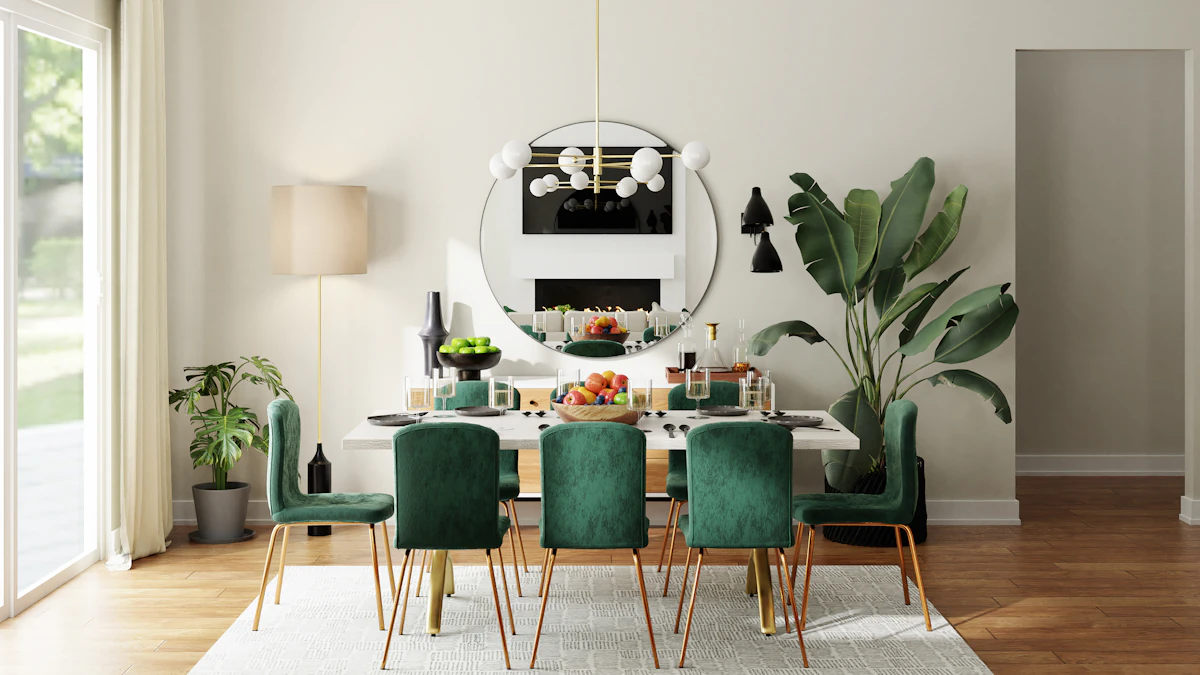
Dining Room Decor Ideas for Family Gatherings
The dining room is where American families mark the moments that matter: Thanksgiving dinner, birthday celebrations, holiday meals, and ordinary weeknight dinners that turn into long conversations. A good dining room does not need to be formal or fancy. It needs a table that fits everyone comfortably, lighting that flatters food and faces, chairs people can sit in for an hour, and a warm atmosphere that makes guests want to linger.
Many modern American homes no longer have a separate dining room; the dining table sits in an open-plan kitchen or living area. The same principles apply there, with one extra job: defining the dining zone so it feels like a place, not just a table in a walkway. A rug, a pendant light, and a sideboard or console can create that definition without building walls.
Choose the Right Table and Chairs
Table size is the most important dining room decision. Allow about 24 inches of width per person and at least 36 inches of clearance behind chairs so people can stand up without hitting a wall. A round table suits small spaces and conversation, because everyone can see each other. A rectangular table suits larger rooms and holiday gatherings, and an extendable table is ideal if you host large groups only a few times a year.
- Measure the room, including doorways, before buying; a table that looks right online may overwhelm a small room.
- Choose chairs with a comfortable seat height, a supportive back, and, if possible, a washable or durable fabric.
- Mixing a bench on one side with chairs on the other adds seating and a casual, family-friendly feel.
- Keep a leaf or extension stored nearby so holiday seating does not require buying a second table.
Lighting, Centerpieces, and the Table Setting
Dining room lighting should be warm and focused on the table. A pendant light or chandelier hung 30 to 36 inches above the table creates a pool of light that makes food look appetizing and faces look warm. Add dimmers so the same light works for homework, weeknight dinners, and candlelit holidays. Avoid a single bright ceiling light, which makes a dining room feel like an office.
Centerpieces should be low enough for conversation across the table. A wooden tray with candles, a bowl of fruit, a small plant, or seasonal greenery works well and can be moved easily when food arrives. For everyday use, keep the table mostly clear with just a runner or placemats, so the room is ready for a meal without a full reset. A sideboard or console is invaluable for storing table linens, candles, and serving dishes, and for holding food during large gatherings.
Color, Art, and Gathering-Friendly Details
Dining rooms suit warm, appetizing colors: cream, sage, warm grey, terracotta, and deep green. A large piece of art or a mirror on one wall adds personality and reflects light, especially in a room without windows. A rug under the table defines the zone and softens sound, but choose a low-pile, washable rug that chairs can slide on easily, and make it large enough that chairs stay on the rug when pulled out.
For family gatherings, think about flow as well as looks. Keep a clear path from the kitchen to the table, place drinks and desserts on the sideboard so the table is not overcrowded, and have extra seating stored nearby. A dining room that works for a crowd is one where hosts are not constantly moving furniture or apologizing for a lack of space.
Dining Room Choices Compared
| Element | Family-Friendly Choice | Formal Choice |
|---|---|---|
| Table | Extendable wood table | Fixed large table |
| Chairs | Comfortable, washable seats | Upholstered, delicate fabric |
| Lighting | Dimmable pendant, warm bulbs | Crystal chandelier |
| Rug | Low-pile, washable | Thick wool, high pile |
| Centerpiece | Low tray, candles, fruit | Tall floral arrangement |
Pros and Cons of a Dedicated Dining Room
- Pros: A clear place for family meals, celebrations, and homework, away from television and work.
- Pros: A sideboard and defined zone make hosting large groups much easier.
- Cons: A separate dining room can sit unused on ordinary days in small homes.
- Cons: Formal furniture and delicate fabrics need more care with kids and pets.

Hosting Checklist
- Table sized for guests, with an extension leaf ready for holidays.
- Warm, dimmable lighting and low centerpieces for conversation.
- Sideboard for serving dishes, linens, and extra plates.
- Washable rug and durable chair fabric for spills.
- Clear path from kitchen to table, and extra chairs stored nearby.
Frequently Asked Questions
What size dining table do I need for a family of six?
A rectangular table around 72 inches long usually seats six comfortably, while a 60-inch round table seats six more tightly. Allow 24 inches per person and 36 inches of clearance behind chairs for comfortable movement.
Should I put a rug under my dining table?
A rug defines the dining zone and softens sound, but choose a low-pile, washable rug large enough for chairs to stay on it when pulled out. Avoid high-pile rugs, which make chairs hard to move and trap food.
How high should a dining pendant light hang?
Hang pendants or a chandelier 30 to 36 inches above the table surface. This creates a pool of warm light over food without blocking sightlines across the table.
How do I make a dining area work in an open-plan home?
Use a rug, a pendant light, and a sideboard or console to define the zone. Keep the table near the kitchen for easy serving, and choose a table shape that suits the available floor space.
What is the best dining table material for families?
Solid wood is durable, repairable, and ages well, while wood-look laminate is cheaper and easier to wipe clean. Avoid glass tops with young children, and choose a finish that hides minor scratches.
Conclusion
A dining room for family gatherings is built on comfort, warm light, and room to move. Choose a table that fits your real guest list, chairs people can sit in for an hour, and lighting that flatters everyone. The best dining rooms are not the most formal; they are the ones where people stay longest at the table.